
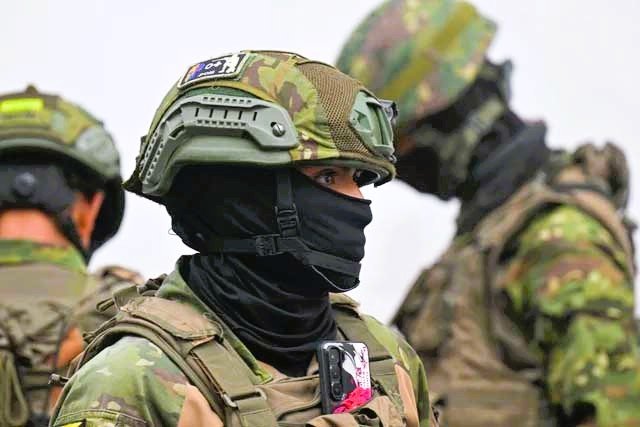
The involvement of the United States in Ecuador’s fight against organized crime is becoming more visible, with American personnel now playing a growing role in supporting anti-gang operations both on land and at sea.
Recent reports indicate that U.S. advisers have assisted Ecuadorian forces in planning and executing operations targeting criminal infrastructure linked to powerful groups such as Los Choneros. In one operation, known as Operation Lanza Marina, U.S. personnel reportedly participated in advisory and support roles during a raid on a coastal site believed to be used for high-speed drug trafficking boats.
Although Ecuadorian authorities have not released full details of the mission, the report highlights a shift from traditional cooperation—focused on intelligence sharing and training—toward more direct operational coordination.
The expanded role aligns with broader efforts by Washington to strengthen Ecuador’s ability to confront increasingly sophisticated criminal networks. U.S. support now appears to include not only equipment and intelligence, but also guidance on tactical planning and leadership within Ecuador’s security forces.
Earlier this year, United States Southern Command confirmed that joint operations with Ecuador had begun under a counterterrorism framework. This followed the designation of groups such as Los Choneros and Los Lobos as foreign terrorist organizations, a move that expanded legal and financial tools available to target them internationally.
At sea, cooperation between the two countries has intensified. Joint operations in recent weeks have led to multiple drug seizures and arrests, including a high-seas interception that resulted in the confiscation of hundreds of kilograms of cocaine and significant financial losses for trafficking networks.
These actions reflect Ecuador’s growing role as a key transit point for cocaine shipments moving north through Pacific routes. Criminal groups have developed increasingly complex logistics, using fishing vessels, speedboats, and other methods to evade detection.
The increased enforcement presence has also made trafficking more costly and dangerous, with reports indicating rising prices for transport roles and heightened risks for those involved.
For Ecuador, the deeper partnership offers critical support in confronting a security crisis that has escalated in recent years. At the same time, it underscores the scale of the challenge, as criminal organizations operating within the country have become part of broader transnational networks requiring coordinated international responses.
