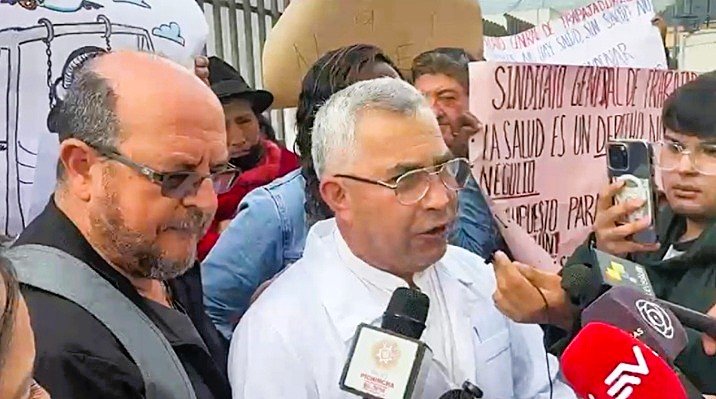
Doctors, health workers, and patients gathered in Quito on April 22, 2026, to protest what they describe as a deepening crisis in Ecuador’s public health system, with particular concern over conditions in the Amazon region.

The demonstration took place outside the Pablo Arturo Suárez hospital in northern Quito, where medical staff demanded urgent government action. Giovanni Pazmiño, general secretary of the Ecuadorian Medical Federation, pointed to severe deficiencies in Taisha, a canton in Morona Santiago, where he recently participated in medical brigades.

“Health is in crisis. I just arrived from the medical brigade in Taisha, where the conditions are extremely deplorable, where access to technology, basic services, medical supplies, and medication is nonexistent,” Pazmiño said.

He described doctors working in isolation, traveling by small plane to reach the area and operating without the tools needed for proper diagnosis. The region has faced ongoing health problems, particularly among children, including deaths linked to lack of medical attention and more recent cases of whooping cough and respiratory illness.

At the Quito protest, doctors highlighted shortages affecting hospitals nationwide. Juan Barriga, head of traumatology at the Pablo Arturo Suárez hospital, said patients are often forced to purchase their own medical supplies, while emergency cases remain on waiting lists.

“We don’t have what we need to work, patients buy things so they can have surgery, there are emergency patients on the waiting list,” he said.

Barriga added that the hospital currently has 1,000 patients waiting for surgery, while only 28 of 72 beds in his department are in use.

Santiago Carrasco, president of the Ecuadorian Medical Federation, warned that the protest marks the start of broader actions across the country. Bolívar Santillán also raised concerns about shortages at Baca Ortiz, saying the hospital lacks supplies needed for chemotherapy treatments for children.