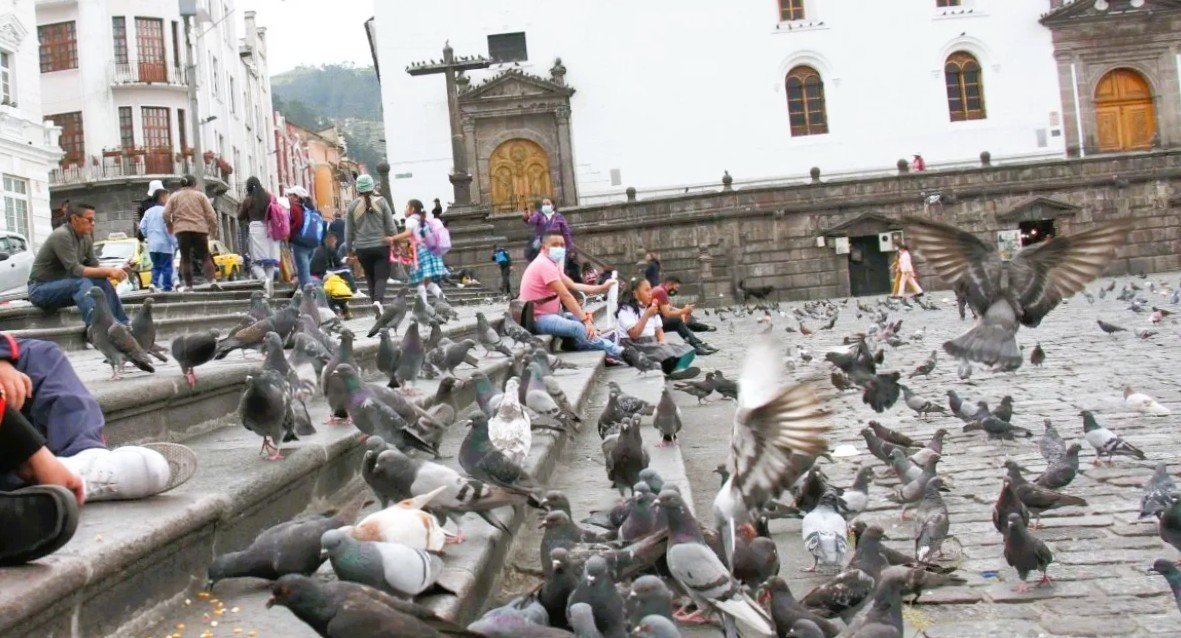
Feeding pigeons in public spaces in Quito remains prohibited under municipal regulations aimed at controlling urban wildlife, protecting public health, and reducing pest problems across the city.

The issue has drawn renewed attention following complaints from residents along República de El Salvador Avenue in northern Quito, where neighbors say food left for pigeons contributes to garbage accumulation and attracts rats and insects.

Residents in the area have urged municipal authorities to strengthen enforcement and improve sanitation measures after reports of growing rodent activity near restaurants, boulevards, and pedestrian areas.

Despite existing restrictions, people continue feeding pigeons in public spaces such as parks, plazas, and sidewalks in different parts of the capital, including popular gathering spots like Plaza de San Francisco.

The prohibition is established under Metropolitan Ordinance 019-2020, which regulates the protection, control, and management of urban fauna in Quito.

The ordinance seeks to balance animal welfare with public hygiene, environmental protection, public safety, and ecosystem management within the city.

Under the regulations, activities involving the feeding, movement, grazing, or commercialization of animals in public areas can be penalized when they negatively affect sanitation or public order.

Violations tied to feeding urban wildlife may be classified as serious infractions.

Authorities can impose fines equivalent to one unified basic salary. In some cases involving individuals, the financial penalty may be replaced with 168 hours of community service.

Municipal officials say the restrictions are intended to reduce health risks and limit conditions that contribute to pest infestations in heavily populated urban areas.