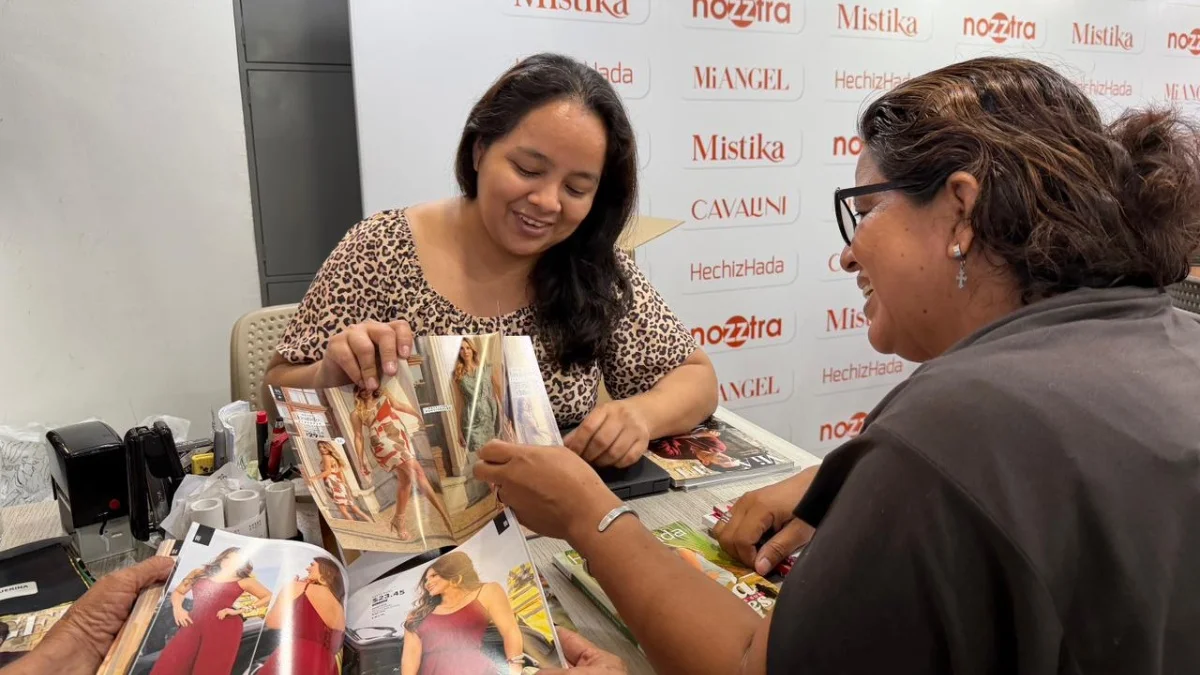
Catalog and direct sales continue serving as an important source of income for hundreds of thousands of women in Ecuador, especially mothers balancing household responsibilities with the need to generate earnings.
According to industry figures, approximately 368,900 women currently participate in direct sales across the country, with mothers representing roughly 70% of that total, or about 258,000 women.
For many families, catalog sales have become an alternative to limited formal employment opportunities while offering flexible schedules and the ability to work independently without major upfront investments.
Some women use the activity as supplemental income alongside traditional employment, while others rely on it as their primary source of financial support.
One seller, Lidia Mejía, said she began working in catalog sales in 2015 through a cosmetics company and was eventually able to help finance the construction of her family home in northern Guayaquil while also supporting household expenses and her children’s education.
The direct sales sector in Ecuador recorded 2% growth in affiliates during 2025. Around 434,000 people currently participate in the industry nationwide, including both women and men.
Cosmetics and personal care products dominate the sector, accounting for more than half of participating companies. Dietary supplements represent another large segment, while jewelry, textiles, cleaning products, and home wellness items make up the remainder of the market.
Industry representatives say one of the main reasons women remain in direct sales is the flexibility it provides. Income levels vary widely depending on sales volume, leadership roles, and the size of distribution networks. Some top-level participants reportedly earn monthly incomes exceeding $30,000.
Mother’s Day season remains one of the strongest periods of the year for catalog sales, second only to December. Companies report increased demand for clothing, footwear, cosmetics, and gift products during May celebrations.
At the same time, industry leaders are expressing concern over trade tensions between Ecuador and Colombia, warning that import restrictions and additional costs on Colombian goods could create supply shortages for cosmetics and other products commonly sold through catalogs.
Some companies say the situation may affect product availability in the coming months if trade conditions do not improve.
