The Municipality of Quito recorded 270 reports of lost pets in 2025, averaging about 22 cases per month, according to figures from the city’s Animal Welfare Unit.
Officials say one of the biggest obstacles in returning pets to their owners is the lack of identification tags, which often delays the process and makes it more difficult to locate families.
In recent days, two dogs were successfully reunited with their owners after being rescued and cared for by municipal animal welfare teams.
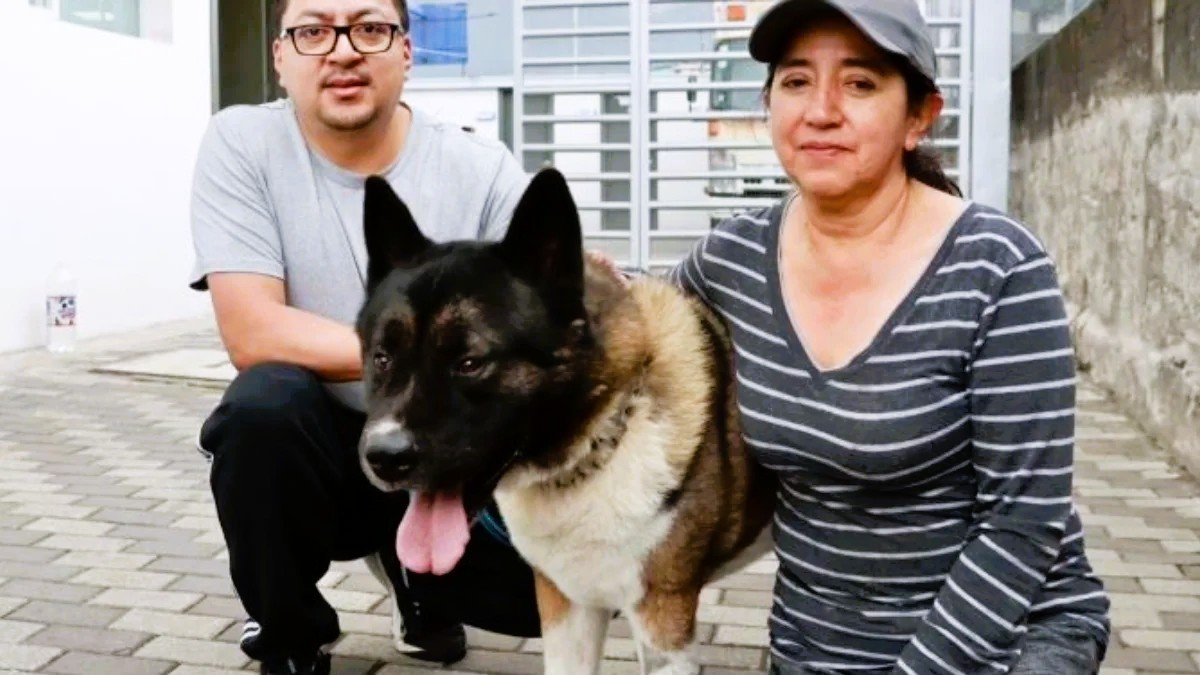
One of the cases involved Cooper, a two-year-old dog similar to an Akita, who disappeared after the electric gate at his home in the San Bartolo neighborhood unexpectedly opened. After hours of searching, his owners were unable to find him.
The following day, animal welfare teams received a report about a frightened and disoriented dog matching Cooper’s description near the Wholesale Market. Because the animal carried no identification, he was transferred to the CAVRAT Quito Sur shelter for medical and behavioral evaluation while the adoption process was initially prepared.
Meanwhile, Cooper’s owners had already submitted photographs and information about the missing dog. Shelter staff later confirmed the rescued animal was Cooper, and the family was reunited with him after presenting vaccination records and photographic proof of ownership.
During his stay at the shelter, Cooper was neutered, and his owners later equipped him with a collar containing a QR code identification system.
Another case involved Sammy, an older dog similar to a Golden Retriever, who was reunited with her family after being missing for 12 days. She wandered away through an open garage door in Conocoto and was later rescued while at risk of being struck by traffic.
Officials said Sammy also lacked identification, which complicated efforts to return her home.
Animal welfare authorities are encouraging pet owners to use identification tags and strengthen security around gates, doors, and access points to reduce the number of lost animals across the city.
