
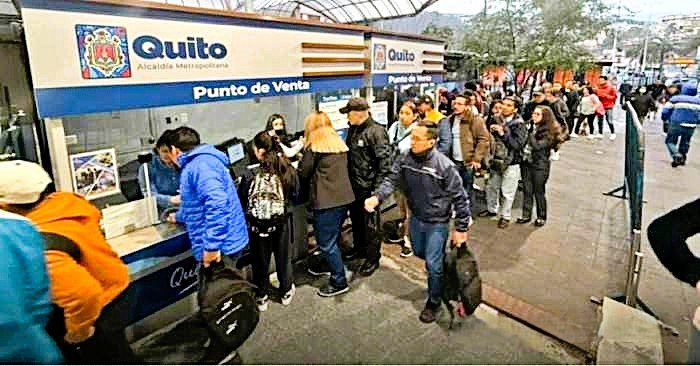
Thousands of residents in Quito faced major transportation problems Tuesday after a partial public transit shutdown left large sections of the city struggling to move commuters.
From the early morning hours, crowded bus stops, long walks, and heavy delays affected workers, students, and residents who depend on public transportation for daily travel.
Several transportation groups suspended service amid disputes with the Municipality over diesel costs and possible fare increases. The disruption quickly spread across the capital, with many people unable to find buses during peak commuting hours.
As demand surged, taxis and informal transportation services became harder to find, while fares in some areas increased sharply.
Mayor Pabel Muñoz strongly criticized the shutdown and warned that sanctions would be imposed against operators who failed to provide contracted service.
Municipal authorities also announced the temporary suspension of Quito’s “peak and plate” traffic restriction system for the afternoon in an effort to ease congestion and help residents move around the city.
Officials said disciplinary proceedings would begin against transport operators accused of violating agreements with the city, while maintaining that dialogue remains possible if pressure tactics are abandoned.
The disruption exposed ongoing tensions between city officials and transportation operators, while also highlighting the dependence many residents have on an already strained transit system.
For much of the day, Quito residents were forced to improvise alternate ways to get to work, school, and appointments as the city struggled with widespread mobility problems.
