
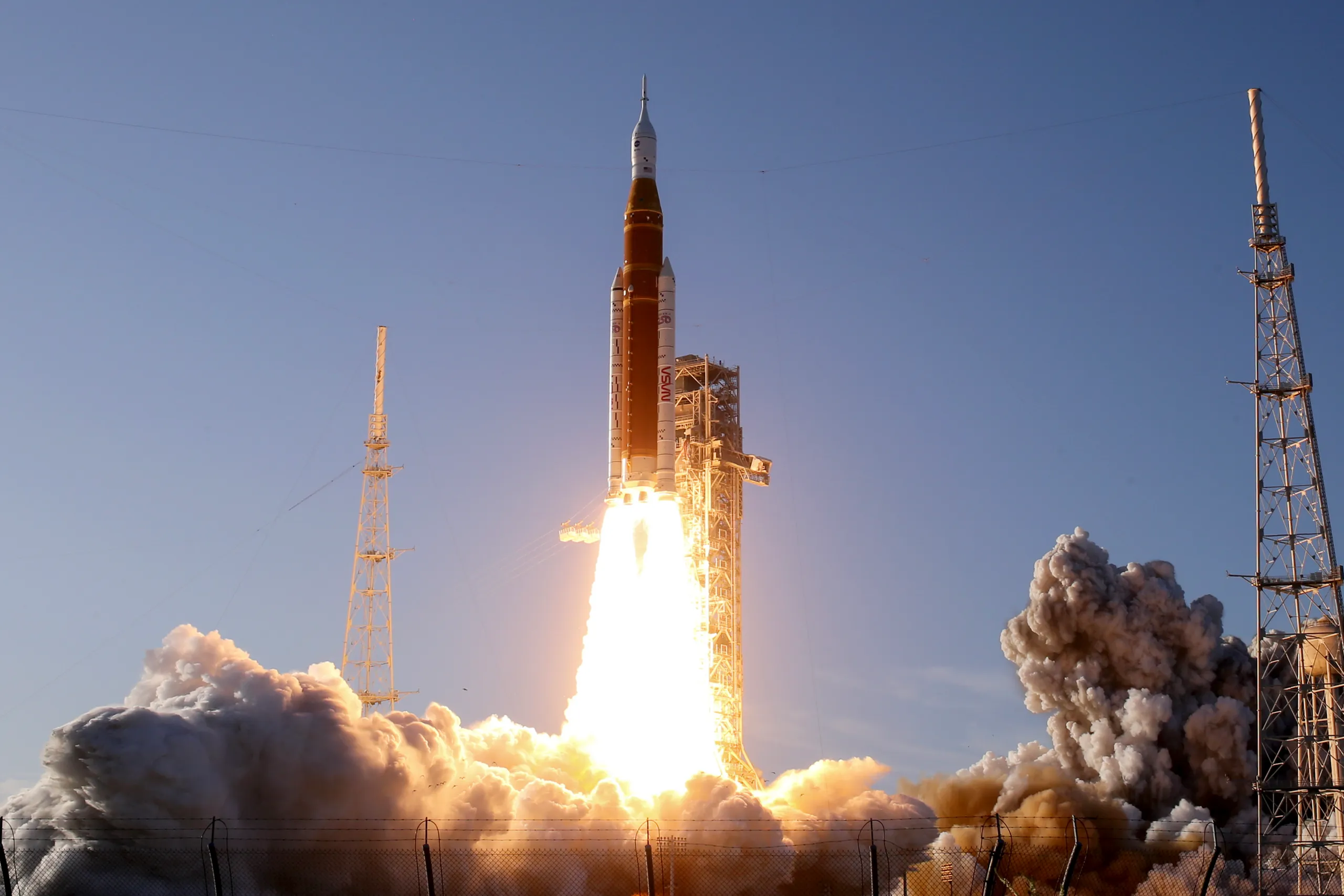
The NASA has successfully launched its historic Artemis II mission, marking the first crewed flight around the Moon in more than five decades and signaling a major step toward returning humans to the lunar surface.

The mission lifted off on April 1, 2026, from the Kennedy Space Center in Florida, sending four astronauts aboard the Orion spacecraft on a journey that will last approximately 10 days.

The crew—Reid Wiseman, Victor Glover, Christina Koch, and Canadian astronaut Jeremy Hansen—will orbit the Moon without landing, in a mission similar in profile to Apollo 8 in 1968. It is the first time humans have traveled toward the Moon since the Apollo program ended in 1972.

The launch followed several tense moments during final preparations. Engineers worked through technical issues, including a communication system fault and a battery reading problem in the launch abort system. Both were resolved shortly before liftoff, allowing the mission to proceed under favorable weather conditions.

Shortly after launch, the Orion capsule successfully separated from the Space Launch System (SLS) rocket and entered Earth orbit. The crew will now conduct system checks and maneuvering tests before heading toward the Moon, located more than 384,000 kilometers from Earth.

The mission represents several milestones. It is the first crewed flight of the SLS rocket and includes the first woman, the first Black astronaut, and the first non-American astronaut to participate in a lunar mission.

Beyond the symbolic achievement, Artemis II is designed as a critical test flight. Engineers will evaluate spacecraft systems, navigation, and crew performance in deep space conditions. These tests are essential before a future mission attempts a lunar landing.

That next step is currently targeted for 2028, when NASA aims to send astronauts back to the Moon’s surface as part of the broader Artemis program.

The long-term goal extends even further. NASA officials describe Artemis as a foundation for sustained lunar exploration, including the possibility of a permanent presence on the Moon. The program is also seen as a stepping stone toward eventual human missions to Mars.

For now, Artemis II stands as a turning point—reviving human deep-space travel after more than half a century and opening a new chapter in space exploration.